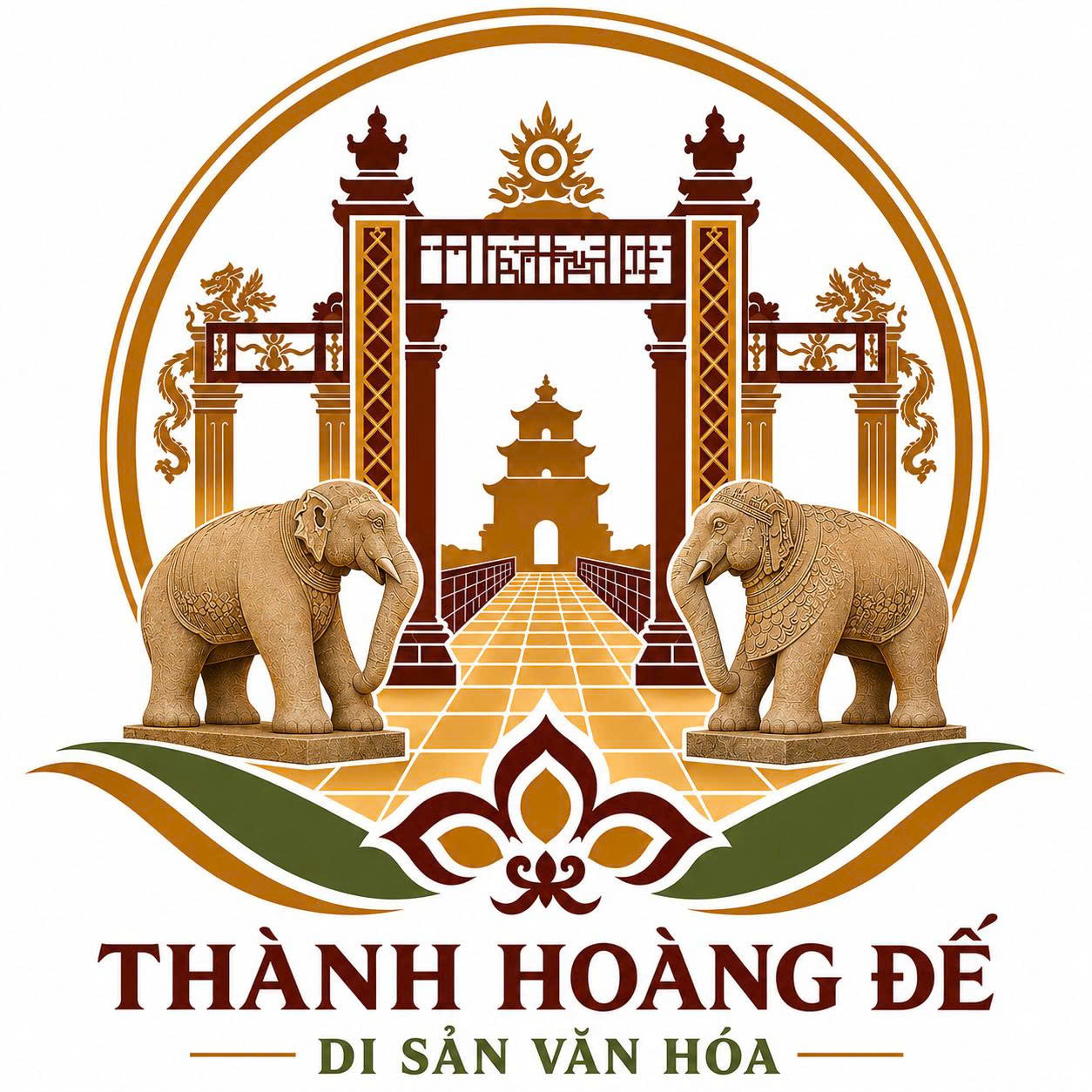
The stone elephant statues of Do Ban Citadel (dating to the latter half of the 12th century) stand guard before the Ve Mon Gate (Inner Citadel) within the Hoang De Citadel National Relic Site in An Nhon Ward, An Nhon Town, Binh Dinh Province. These are exemplary Champa sculptures preserved within the grounds of the ancient Do Ban capital.
The female elephant statue, positioned on the right when viewed from the outside, is smaller than the male and depicted in a static pose. Its body is straight, suggesting a walking motion, while the legs and base form a solid, stable mass. The head is large with a broad forehead, adorned with a crown featuring two tiers of staggered, pointed lotus petals. The eyes are small, and the large ears lie flat against the sides of the head; bands from the crown drape down past the ears, connecting to bell-shaped ornaments.
A long decorative cloth hangs from the elephant's neck over its chest, embellished with two rows of small bells interspersed with diamond and half-diamond patterns. Only one tusk remains; the other is lost, though the mortise hole is still visible. The trunk is powerful, curling down to grasp a lotus blossom, while the long tail reaches the base.
The elephant's body is rounded and slender, supported by four large, sturdy legs. Braided ropes cross over the flanks. The harmonious composition, graceful lines, and exquisite carving technique imbue the statue with an air of majesty, nobility, and regality.
The stone elephant statues of Do Ban Citadel are authentic, unique artifacts that stand as exemplary and distinctive works of Champa stone sculpture. Despite the passage of centuries and numerous historical upheavals, both statues remain in their original locations, standing guard before the Ve Mon (Guard Gate) of the Inner Citadel within the Hoang De Citadel complex. Experts in Champa culture highly value the statues for their historical, cultural, and artistic significance, noting that they belong to the Thap Mam style—also known as the Binh Dinh style.